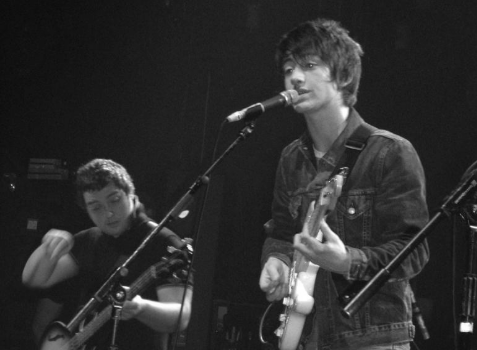
Arctic Monkey’s 2005 debut album became England’s fastest selling debut record with 360,000 copies sold in just one week. This rise to success was extremely fast and opened up the opportunities for their influential and illustrious career, but they weren’t always this music-oriented. Arctic Monkeys reshaped modern rock through innovative songwriting and constant musical evolution, leaving a lasting impression on the artists who followed.
Originally a garage band, AM was created out of boredom to find purpose and an outlet for their thoughts. Alex Turner, the lead singer and songwriter, had little instrumental experience until 2002 at 16 years old and quickly developed his extensive skills. Raised by two music loving parents, Turner was exposed to the great bands of the decade at a very early age, including a love for The Beatles, David Bowie, and Led Zeppelin. Him and fellow band members Matt Helders and Andy Nicholson grew up and attended secondary school together. The trio had developed their musical backgrounds alongside each other by performing parodies at their graduation ceremony and bonding over their jazz interests. Their breakthrough into the rock scene was inspired by The Stroke’s growing popularity in the UK. By combining elements from The Strokes, 1960s British rock, 2000s garage rock, and Britpop, Arctic Monkey’s signature sound was created.
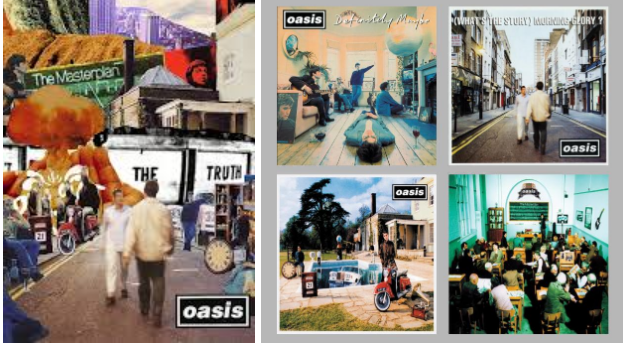
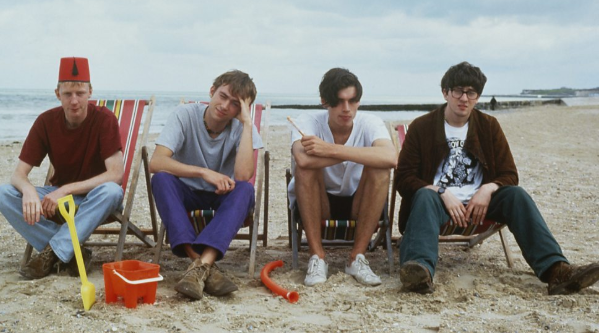
Arctic Monkeys helped develop the modern rock scene by creating a mixture of different elements from bands like Oasis, Blur, The Strokes, and The Clash. The band takes inspiration from what was formerly popular to enhance the sounds people already love and are familiar with. This is clear in tracks like Brick by Brick, and The View from The Afternoon, which share similarity with Oasis’ defining pop rock album, “(What’s The Story?) Morning Glory”. This can also be seen in Arctic Monkeys Suck It and See, Mardy Bum, and Teddy Picker, which mirror the song structure used in many works of The Strokes. Arctic Monkeys are widely recognized for their ability to recreate the popular British sound from earlier decades into modernized and reimagined pieces. Other notable influences include The Pixies, Patsy Cline, and Beach Boys.
Turner’s approach to his songwriting differs from other bands in the modern rock era. He collects inspiration from classic literature and poetry, making each song a piece of art. Turner has frequently mentioned the novel “Crime & Punishment” as well as references to classic authors such as Conrad, Nabokov, and Hemingway. These influences are illustrated in the band’s more poetic pieces like Suck it and See, Secret Door, 505, and Do I Wanna Know? Turner uses the melody-first approach, meaning he creates a chord progression first, then shapes his lyrics to fit the rhythm. Their lyrics are written solo on an acoustic scale, later developed into the structural pieces we now know. These lyrics portray the romanticized perspective of a teenager’s imagination, with songs like Fluorescent Adolescent, Mardy Bum, 505, and I Bet You Look Good On The Dancefloor. The melody and rhythms of Arctic Monkey’s songs are created using formulaic structures, combined elements from other artists’ work, and layering varieties of guitar riffs. Songs like Mardy Bum and Cornerstone use more conventional chords to highlight deeper themes with more serious manners. Their harder rock tracks are composed of guitar riffs using shortened repetitive notes, called “staccato notes,” to make them stand out and create patterns. Arctic Monkeys are also known for their usage of power chords, more evident in earlier albums, especially “Whatever People Say I Am, That’s What I’m Not,” which give them an enhanced and more intense sound. These tracks also utilize harder drums, more powerful vocals, and phonaesthetics, which are nonsensical lyrics.
Aside from their unique songwriting approach, Arctic Monkeys also reached success with their reinvention throughout each album. “Whatever People Say I Am, That’s What I’m Not,” is AM’s heaviest album that digs more into rock tones than their other work. The album is extremely upbeat and features fast paced drums throughout all their songs like Dancing Shoes, I Bet You Look Good On The Dancefloor, and Fake Tales of San Francisco. Their debut captured everyday teenage life and used detailed scenes to elevate their cinematic narrative styles. “Favourite Worst Nightmare,” Arctic Monkey’s second album, is more aggressive and faster than their previous one. It shows a slower and deeper side to their artistry with moodier songs like 505, Fluorescent Adolescent, and Only Ones Who Know. These songs have a less formulaic structure and more experimental style. “Humbug,” their third album, became a huge turning point in the band’s success and sound. It is produced with Josh Homme, who was the founder of Queens of the Stone Age. “Humbug” brings in a darker and heavier tone with desert rock sounds. Songs like Crying Lightning, My Propeller, and Secret Door use more imagery and poetry to bring out themes of grief and longing. This is especially clear in the song Cornerstone, which explores grief and the complexity of wanting to replace something you’ve lost. Following the release of their fourth album, “AM,” Arctic Monkeys had reached massive success and popularity. Why’d You Only Call Me When You’re High? and I Wanna Be Yours became extremely popular throughout the world and reached over five billion streams combined. Do I Wanna Know? has a total of three billion streams on its own, making it one of the most popular rock songs of all time. The experimental sound and themes that are unique to each project makes Arctic Monkeys stand out and explains how they gained their success.
One of the biggest reasons that Arctic Monkey’s projects have remained so popular is the deeply developed composition and thought put into each individual song. Unlike other bands who focus primarily on the production of their albums as a whole, Arctic Monkeys use specific chord movements and riffs to emphasize the meaning of every track itself. Teddy Picker, from “Favourite Worst Nightmare”, is a perfect example of this. The song is driven by a rapid angular guitar riff that repeats throughout the track, adding momentum. The sound clings onto the aggressive drumming from Matt Helders and lead guitar, creating a unique and cohesive rhythm. This sound emphasizes the rebellious nature of Teddy Picker and Turner’s frustrative tone. 505 takes an opposite approach. Rather than beginning with a riff, the song begins with an organ inspired tone that gives the song its tension. This initial sound is built up with the addition of guitar, then drums, then finally its dramatic final chorus. This is a perfect example of what Arctic Monkeys does best, as this composition makes you feel like you are ascending into the narrative that Turner paints with his lyrics for 505. This technique becomes even more apparent in Crying Lightning, which is built around a descending guitar that would usually sound unpleasant if it weren’t for Arctic Monkeys ability to set a scene. The sound balances aggressive drumming, chord coloring, and a shifting riff. Chord coloring is when extra notes are added onto a basic chord, creating dreamier and moodier sounds. This is used in Crying Lightning to highlight the mysterious and unsettling mood of the song.
Two decades after their debut, Arctic Monkeys still remains as one of the most globally popular bands. Their willingness to stand out and experiment from the fast-paced indie rock style of their earlier years to the darker influences of “Humbug” reaches out to many audiences and leaves a lasting impression on the genre. Arctic Monkeys innovative approach to songwriting, musical experimentation, and lasting impact continues to shape the modern rock scene.
Categories:
Arctic Monkeys Impact on the Modern Rock Era
June 4, 2026
More to Discover