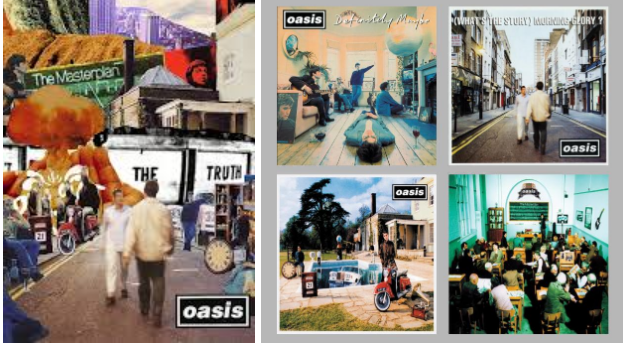
In a time of social media and recommended songs, it is easy to get lost on the surface creativity of great artists, but what is hidden under their biggest hits? When people think about Oasis, they usually stop at the songs everybody knows. “Wonderwall,” “Champagne Supernova,” and “Don’t Look Back in Anger,” have tied themselves to the legacy of the band so much so that it’s easy to forget what exists right beneath them. For many fans, Oasis is more than the obvious hits, rather defined by the creativity and vulnerability shown in their lesser-known tracks. These songs that are arguably some of Oasis’ best work, live deeper in their catalog, among the B-sides, demos, and live recordings.
What makes Oasis stand out is that their B-sides feel less overlooked and more like they could have easily carried albums on their own. Songwriter Noel Gallagher has stated multiple times that he doesn’t write B-sides, he just writes songs. These tracks are crafted with the same attention, patience, and vulnerability as any single on their albums. Noel’s songwriting philosophy is that, “the B-sides are for his more authentic tracks, while the A-sides are typically for the masses.” Noel has also expressed his regret multiple times for not making Oasis’ more popular B-sides singles when he had the chance to, since he regards many of these songs as his best. They are louder, rougher, and more personal, which gives them a lasting importance in music history and fan’s hearts.
“Rockin’ Chair” is one of the clearest examples of this. Released during the height of Oasis’ early dominance in the 90’s, the song carries everything that made the band so popular. Liam Gallagher’s raw vocals and the song’s smooth, slower melody makes the song stand out among their other tracks. The song also shows a more vulnerable side to the Gallagher brothers and explores the feelings of nostalgia, hopelessness, and the loop of feeling empty inside. “Rockin’ Chair” includes an acoustic solo that comes right after the first chorus, differing from regular tracks and adding the feeling of melancholy which brings out the aching yet beautiful soul of the song. This also demonstrates what many consider to be Liam’s greatest vocals, with his voice powerfully leading the tune through every emotion.
“Hey Now!” from (What’s the Story) Morning Glory? is another song that gets overlooked because of the album’s towering reputation. Similar to “Rockin’ Chair,” Liam’s voice carries the same powerful, raw, and vulnerable performance, but on a less depressing note. The song’s hypnotic repetition and layered shoegazey guitar display Oasis’ ability to invoke emotion and create an atmosphere for each song. “Hey Now!” also captures the feeling of excess confidence that defined the band’s peak. It embraces the chaos of life and living shamefully and free despite what is weighing you down. The song emphasizes the idea that time is running out and we cannot spend our time living in the past, with lyrics mentioning, “no time for running away now.” “Hey Now!” is also notably one of the only Morning Glory songs that has never been performed live by the band.
Then there is “Headshrinker,” one of Oasis’ most aggressive tracks. Unlike their usual polished anthems, “Headshrinker” combines chaos, edge, and punk to lean away from the usual Britpop staples. Noel said to Melody Maker magazine that the song was written before the band had a manager and he considers it some of the best drumming done in any of his work. The song was written about a girl that his brother, Liam, was going out with who would follow the band around constantly and bother everybody. “Headshrinker” refers to a mentally exhausting person, according to Noel’s interpretation. Musically, the song features an echoey-microphone sounding voice from Liam, similar to other Oasis tracks such as “Bring it on Down,” “Roll With It,” and “Acquiese.” It also features intense guitar riffs, fast tempo, and heavy rhythm, which continue to hype up audiences and bring together fans.
Even demo’s like “Angel Child” can be included in this mix. The “Angel Child” demo emphasizes how strong Noel Gallagher’s talents are as he provides main vocals for the track and songwriting. The song is an acoustic stripped-back piece, as many of Noel’s contributions are, and it feels more intimate than usual Oasis performances. This exposes their creative process and authenticity, creating beautiful rhythms and stories without a huge production. The end melody of “Angel Child” is my personal favorite as the guitar strumming feels so heartfelt and light which creates a truly beautiful piece of music. The lyrics focus on finding one’s identity and being freed from past mistakes, a very touching and personal piece that blends guitar, maracas, and tambourine to bring the feelings to life.
Moving towards the later years of Oasis, songs like “Flashbax” and “Pass Me Down the Wine” show the band’s evolution. “Flashbax” features more of Noel’s vocals and is unlike any other Oasis track. The song is melodic with an acoustic guitar, giving it its reflective tone. The lyrics are widely recognized by fans due to their unique and creative sayings, such as, “Sitting on a throne will give a bad back to you, Living on my own was like a flashback to the days when I was lost and lonely.” “Pass Me Down the Wine” is unique to the band as it’s one of the many songs written by Liam Gallagher. The song mirrors some similar elements from Liam’s later solo work, like the song, “Why me, Why Not?,” which has the same Beatles inspired feel and instrumentation.
Some other notable and great Oasis B-sides that are similar to their aggressive rock songs include “Acquiese,” “Round Are Way,” “Fade Away,” and “Step Out.” More B-sides that reach towards Oasis’ emotional, deeper side include “Talk Tonight,” “Listen Up,” “D’Yer Wanna Be A Spaceman?,” “Half the World Away,” and “Going Nowhere.”
What makes Oasis’ lesser-known tracks different is how varied they are. Their B-sides were not copies of their bigger hits, but able to stand out individually as a piece of music created with the same passion and effort as other tracks, sometimes even more. They explore melancholy, reminiscence, aggression, and experimentation. This gives Oasis’ catalog its charm and explorative aspect, which is a reminder that bands are not defined by only their greatest hits. For Oasis, some of the most memorable songs exist outside of the spotlight.