The other day, I had a brief exchange with a classmate. I would recommend a favorite song of mine to him, and in exchange, he would recommend one of his to me. Long story short, we did not enjoy the other’s choice much. Granted, we are somewhat polar personalities brought together only by a couple of years of shared circumstances and experiences. But this exchange made me realize something much greater than our relationship and more about the state of classical music in modern society. In exchange for his country song (which I concede is not quite my genre), I gave him two pieces: Mahler’s Sixth and Tchaikovsky’s Romeo and Juliet Fantasy Overture. And maybe they were too big pieces to recommend, but he simply did not have the patience to sit through them.
Maybe I generalize when I say that our attention spans have significantly decreased. My friend was simply a part of this trend, and it is not his fault. Because of changes in education, entertainment, and media in the last decade or two, we opt for faster forms of communication and information. And we would certainly rather not listen to or decipher symphonic works from a century or two ago. But in doing this, we neglect an entire sect of the art and music world that certainly has a lasting impact on today’s music. We ignore an art form that has laid the foundation for the things we love today. We close the opportunity to experience beauty and expression, and for what? Our presupposed narratives and clichés saying classical music is long and boring?
I will admit, classical music has its moments. There is a time and place for it, just like everything else. Maybe exchanging pieces during calculus was not the optimal time to experience grand and theatrical symphonic oeuvres. But ultimately, it should not be shunned and ignored entirely. I share the same philosophy with films. It is important to watch older films, even if they might be objectively slower and more boring, so as to learn about what makes the films today so much better. Going to the roots of something we love is the best way to find out why we love them. Music is no different. Many popular pop and hip hop songs take heavy inspiration from classical prose directly and indirectly. For instance, Blackpink even sampled Paganini’s La Campanella in their 2022 song Shut Down. And in general, classical music has coined so much of the musical terminology that dictates the majority of mainstream music. Bach himself is a foundational voice of all things classical and hip-hop with his intricate and mathematical harmonies. To say the least, classical music is eternally influential on modern music, and it is important to recognize it and not alienate it from our musical habits.
What appears to be severely overlooked is the versatility of classical music as a genre of music. In general, it can be divided into multiple subgenres that represent different eras. While most people associate classical music with classical era music (approx. 1750-1830), the term extends to eras such as romantic (approx. 1804-1910) and the multiple sub categories within the 20th century (impressionist, expressionist, etc). In essence, not all classical music is Mozart. One can go down rabbit holes, traversing the various compositions of a single composer. Exploring the works of an individual can certainly allow you to explore them as people and ultimately artists, just like you would with the discography of any other musician or the works of an artist.
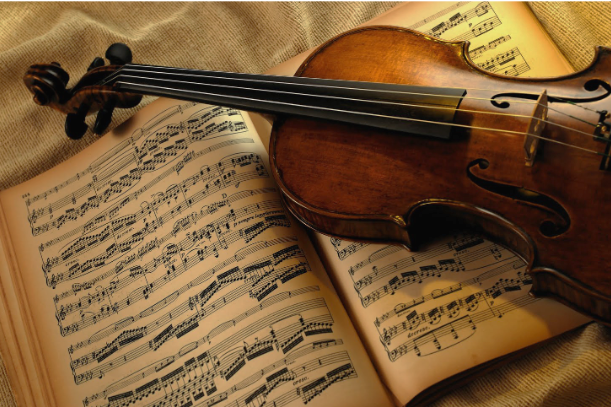
Classical music is also diverse in its instrumentations, making for different pieces having unique sounds accordingly. For instance, a string quartet is much different in sound compared to a full scale orchestra, not simply because of a sheer contrast in numbers, but in the highlighted individuality and hyper communication between the musicians. While the symphony is led by the baton of one, a chamber ensemble is driven by a collective internal pulse. And the result is uniquely delectable. So in essence, there are plenty of different combinations of instruments with respective pieces and compositions, making the classical music genre one of the most diverse and explorable.
And finally, while this may be entirely subjective, I do believe that the classical form of music is the most genuine and expressive form of conveying human emotion. While one could argue that lyrical music is better at storytelling, and classical music does sometimes accompany stories (operas, films, etc), classical music reflects more feelings or sentiments. They might reflect a composer’s longing, joy, nostalgia, and more in the most sincere form. And in general, I think that we as a society need to be more genuine and true to our emotions and ultimately ourselves.
So is classical music for everyone? Probably not. Not everything is for everyone, and that is completely fine. But it might be for you, if only you gave it a chance. You might just gain a greater appreciation for another form of music and art.