“A government’s first duty is to protect the people, not run their lives” – Ronald Reagan
On February 14, 2026, the Department of Homeland Security officially shut down due to lawmakers’ inability to meet a midnight Friday deadline to fund the agency and workforce of over 250,000 agents. The department saw its baseline funding expire after lawmakers left town for a week-long recess but left without a deal to put federal Immigration officers in check. Democrats say that after the murder of two U.S. citizens, Renee Good and Alex Pretti, it’s time for some guardrails to be enacted. They ultimately desire reforms for the force to be cemented in place before they agree to fund the department.
This is now the third shutdown in a matter of months; however, it affects only DHS and not other federal agencies. Still, the department covers a range of tasks, from immigration enforcement to disaster response to airport security. Democratic leaders Hakeem Jeffries and Charles Schumer have laid out 10 demands.
- Require DHS officers to use targeted enforcement to ensure they do not enter private property without a warrant, and require proof that the immigrant in question is not a U.S. citizen before holding them at an immigration detention center.
- Prohibit ICE and immigration enforcement from wearing face coverings.
- Require DHS officers to display their agency, ID, and last name if asked.
- Prohibit agents from conducting enforcement at sensitive locations, including medical facilities, schools, child-care facilities, churches, polling places, and courts.
- Prohibit officers from conducting searches or questioning based on an individual’s presence in a certain area, job, accent, or race and ethnicity.
- Place into law a reasonable force policy, so that the force conducted by the officer may be equal to the force given.
- Ensure state and local coordination and oversight.
- Make clear that all buildings where individuals are detained must comply with the same basic detention standards.
- Require the use of body-worn cameras when interacting with the public.
- Regulate and standardize the uniforms and equipment worn and carried by DHS officers during enforcement operations.
GOP (Grand Old Party/Republican) lawmakers have pushed against the requirement that officers wear body cameras and the prohibition on wearing masks. Many Republicans are worried about officers’ identities being revealed because it may lead to conflict with their private lives. They also say implementing body cameras would make it easier for people to dox federal officers. Republicans in the Senate tried to pass a short-term funding extension on Thursday to allow time for negotiations to play out. Still, Democrats blocked the measure before lawmakers in both chambers left the Capitol for the recess.
The leaders of Immigration and Customs Enforcement and Customs and Border Protection told lawmakers that their agencies would likely not see a significant impact on their enforcement operations. This comes after the 70 billion dollar bill was passed last summer to both agencies. ICE Acting Director Todd Lyons said the shutdown could affect DHS’s work on transnational crime but did not note any impact on immigration operations.
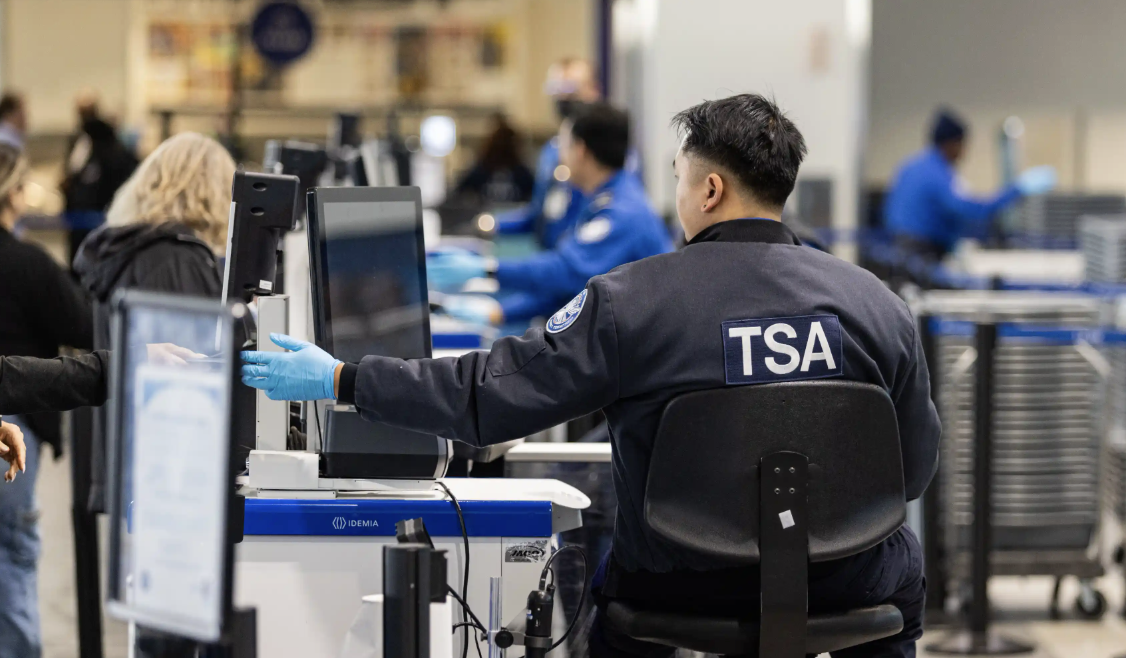
Most of the Transportation Security Administration’s roughly 64,000 employees are considered “essential” workers and have to stay on the job. If the shutdown lasts for a few more weeks, travelers across the country could feel the impact. In past shutdowns, airport security workers stayed home more often when they began missing paychecks. On Wednesday, during a House hearing, Ha Nguyen McNeill, the acting administrator of the TSA, said, “We saw a lot of folks have to take on second jobs, making for extremely long work days…Some are just recovering from the financial impact of the 43-day shutdown. Many are still reeling from it. We cannot put them through another such experience.” Looking at the last government shutdown, the number of unscheduled absences tripled at some airports, according to McNeill. Fortunately for travelers, February is a relatively quiet month for the U.S. aviation industry. However, traffic tends to pick up in March, when the spring break travel season begins.
CONCLUSION
Ultimately, the fact that this shutdown is confined to agencies within the Department of Homeland Security strongly suggests it won’t be as disruptive as last year’s 43-day shutdown. Regardless, we should urge our lawmakers on both sides of the political spectrum to reach an agreement that satisfies both parties. After all the hard work TSA agents put in each day, they deserve to be compensated and certainly shouldn’t be penalized for our lawmakers’ inability to provide a solution.